Ownership Transition Planning by CAs for Business Continuity and Growth
Learn how ownership transition planning by CAs helps businesses manage ownership changes, succession planning, wealth transfer, governance, and long-term business continuity.
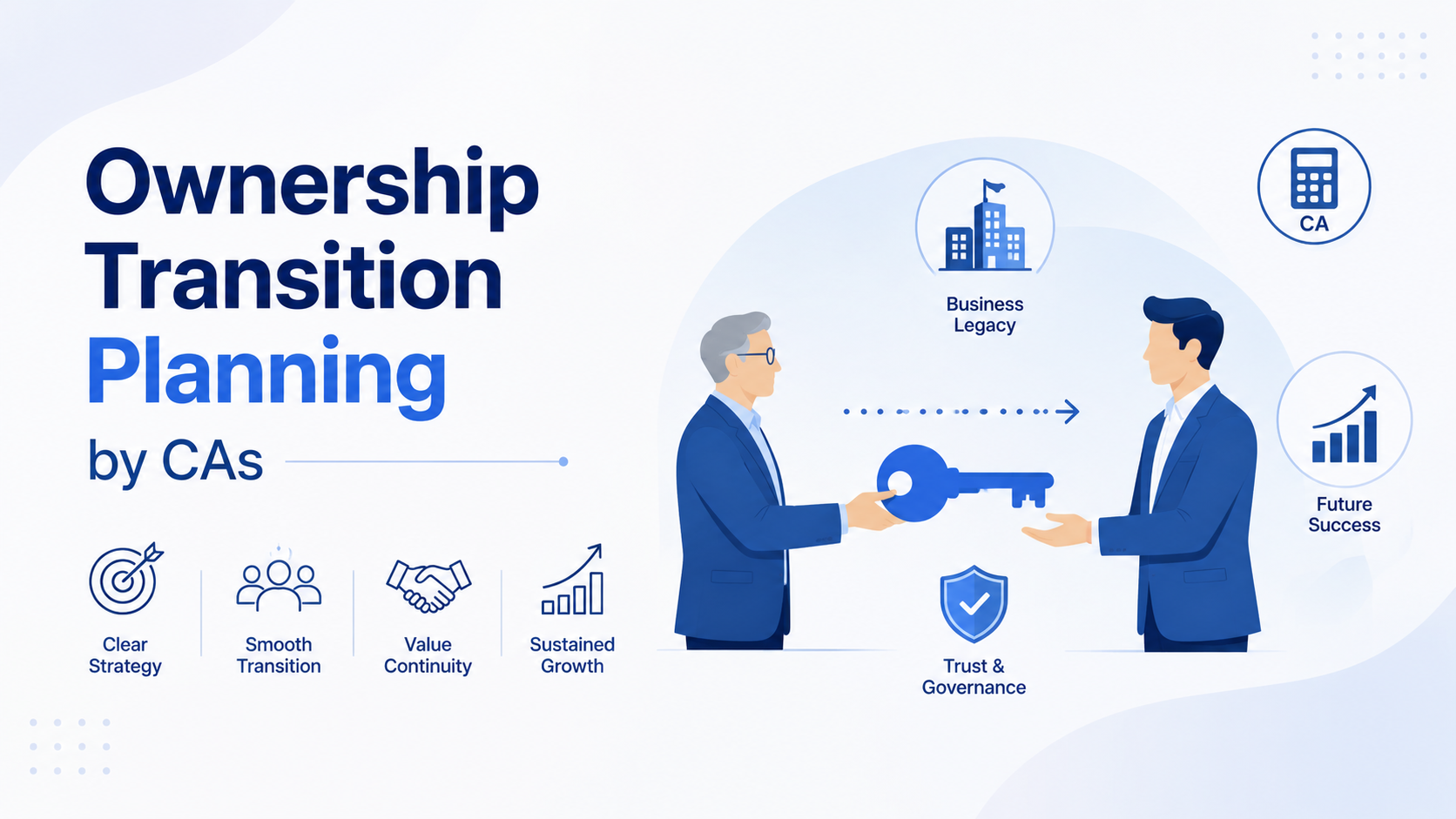
Table of Content
- Why Ownership Transition Planning Matters
- Ownership Transition Planning by CAs Is More Than Succession Planning
- The Financial Impact of Ownership Transitions
- Family Businesses Face Unique Transition Challenges
- Governance Becomes More Important During Ownership Changes
- Preparing the Next Generation for Ownership Responsibilities
- Business Valuation Plays a Key Role
- Ownership Transition Planning by CAs Supports Business Continuity
- Why Demand for Ownership Transition Advisory Is Growing
- The Future of Ownership Transition Planning by CAs
- Conclusion
Every business owner will face the big question at some point: What happens to the business during an ownership change? Some pass it down to the next generation, while others might introduce new partners or key employees into the fold. Prepping the business for a sale is another route. Business founders usually dedicate many years to building something successful, but they often put off thinking about how to transition ownership until they absolutely have to.
That's where Certified Accountants step in; their planning is super important. An ownership swap isn't just about paperwork and transferring shares. It impacts a lot of areas – business flow, money stuff, leadership lines, even family ties. If done badly, it can really mess things up, ruining all the hard work from years ago. On the flip side, a smoothly planned switch can actually help the business grow and stick around for a long time.
Why Ownership Transition Planning Matters
Lots of business owners think there'll always be time to worry about ownership transitions down the line. But ownership changes usually happen when you least expect it. You know, retirement, health issues, business growth, family stuff, or just strategic moves can really speed up the need for planning.
If no clear plan is set, these transitions can cause major confusion. Employees might doubt future leadership, families could clash with differing hopes, and investors may second-guess where the company is headed.
Ownership transition planning by CAs is getting more important every day. It offers clarity on ownership, leadership, duties, and money matters. This keeps the business running smoothly during ownership shifts. So, having a solid plan really helps.
Ownership Transition Planning by CAs Is More Than Succession Planning
A lot of folks mistakenly use "ownership transition planning" and "succession planning" as if they mean the same thing, but they actually don't. Succession planning is all about picking the next leaders, whereas ownership transition planning looks at a bigger picture – who owns the company, how that ownership gets passed on, and making sure everyone's financial stuff runs smoothly afterward.
When Chartered Accountants handle ownership transitions, they juggle lots of things at once. Not only might a business need new bosses, but it also requires a rock-solid ownership setup for staying stable in the long run. Sometimes, those who lead the company aren’t the same ones who'll own it, which is why detailed planning is super important. So, by thinking through both leading and owning roles, Chartered Accountants aid companies in setting up much more dependable handover plans.
The Financial Impact of Ownership Transitions
Ownership changes greatly affect businesses and their stakeholders financially. Valuation, ownership percentages, funding, and wealth distribution usually need scrutiny.
Sometimes, owners prefer gradual transfers instead of doing everything all at once. This means family members might get shares while letting pros handle daily tasks. Other times, they sell ownership to outside investors or strategic buyers.
When CAs do ownership transition planning, businesses get to look at their choices from a financial angle. They figure out how different setups will impact cash flow, profits, taxes, and future stability. This lets owners base their decisions on facts, not guesses.
Family Businesses Face Unique Transition Challenges
Ownership transitions are extra complex in family-owned businesses. While corporate deals mainly focus on finances, family businesses deal with emotions and relationships too. Different family members often expect various things when it comes to control and roles in the company. These differing hopes can cause trouble down the line if no one talks about them soon enough.
That's where Chartered Accountants step in, helping families plan and creating space for necessary discussions. They give unbiased advice, pushing the focus onto what's best for the business and finances, not feelings. When CAs clarify ownership rights and duties, it keeps potential fights at bay by ensuring everyone knows the rules and their place.
Governance Becomes More Important During Ownership Changes
Ownership transitions usually call for stronger governance structures too. Founders often make many decisions informally when they're deeply involved day-to-day. But post-transition, companies frequently need more formal processes for accountability and consistency. Governance frameworks help by clarifying:
- Decision-making authority
- Ownership rights
- Reporting responsibilities
- Leadership accountability
- Conflict resolution procedures
The ownership transition planning by CAs process often includes reviewing governance systems to ensure they remain effective after the transition. Strong governance helps organizations maintain stability and confidence during periods of change. For many businesses, governance becomes one of the most important factors influencing the success of an ownership transition.
Preparing the Next Generation for Ownership Responsibilities
Ownership and leadership require different skills. A family member may inherit ownership interests but still need time to develop the knowledge and experience required to contribute effectively to the business. Similarly, future shareholders must understand their responsibilities as owners, even if they are not directly involved in management.
One aspect of ownership transition planning by CAs involves preparing future owners for these responsibilities. This may include discussions regarding governance, financial reporting, business performance, and long-term strategic objectives.
Preparing future owners early often results in smoother transitions and stronger decision-making after ownership changes take place. Successful ownership transitions rarely happen overnight. They are usually the result of careful planning and gradual preparation.
Business Valuation Plays a Key Role
A clear understanding of business value is essential during ownership transitions. Whether ownership is being transferred within a family, sold to a third party, or shared among existing stakeholders, valuation often becomes a central issue. Different parties may have different views regarding what the business is worth.
The ownership transition planning by CAs process frequently includes business valuation analysis. Chartered Accountants help establish realistic assessments based on financial performance, market conditions, growth potential, and other relevant factors.
Accurate valuation supports fair negotiations and reduces uncertainty during ownership transfers. It also helps stakeholders understand the financial implications of different transition options.
Ownership Transition Planning by CAs Supports Business Continuity
One of the greatest risks during ownership changes is disruption to normal business operations. Employees, customers, suppliers, and investors often look for reassurance when ownership transitions occur. Uncertainty can affect confidence and create operational challenges if communication is not handled effectively.
A structured ownership transition plan helps reduce these risks. By clearly defining roles, responsibilities, timelines, and governance arrangements, businesses can maintain stability throughout the transition process. This is one of the key benefits of ownership transition planning by CAs. The objective is not simply to transfer ownership but to ensure that the business continues operating successfully before, during, and after the transition.
Why Demand for Ownership Transition Advisory Is Growing
Across many industries, a large number of business owners are approaching retirement or preparing for generational transitions. At the same time, businesses are becoming more complex, making ownership changes more challenging than they were in previous decades.
As a result, demand for ownership transition planning by CAs is increasing. Business owners recognize that ownership transfers require careful planning involving governance, taxation, valuation, succession, and financial management.
Chartered Accountants are uniquely positioned to guide these areas, making ownership transition advisory a growing service opportunity within the profession. For many firms, helping clients navigate ownership changes is becoming just as important as traditional compliance and reporting services.
The Future of Ownership Transition Planning by CAs
As family businesses, entrepreneurial ventures, and privately owned companies continue evolving, ownership transitions will become an increasingly important business issue. Future generations of owners are likely to expect greater transparency, stronger governance, and more structured planning processes.
This trend creates significant opportunities for Chartered Accountants. The future of ownership transition planning by CAs will likely involve a combination of financial advisory, governance consulting, succession planning, valuation services, and strategic business guidance. Businesses that prepare early are often better positioned to preserve value, maintain continuity, and achieve successful transitions.
Conclusion
Ownership transition planning by CAs is becoming an essential service for businesses seeking long-term continuity and sustainable growth. Ownership changes involve far more than transferring shares or leadership responsibilities. They require careful consideration of governance, valuation, succession planning, financial stability, and stakeholder expectations. Chartered Accountants bring valuable expertise to this process, helping businesses create structured transition strategies that reduce uncertainty and support future success. As more organizations prepare for generational and ownership changes, the importance of ownership transition planning is expected to grow significantly.

FAQs
What is ownership transition planning by CAs?
Ownership transition planning by CAs involves helping businesses prepare for ownership changes through financial planning, governance design, valuation analysis, succession planning, and business continuity strategies.
Why is ownership transition planning important?
It helps businesses manage ownership changes smoothly, reduce uncertainty, maintain operational stability, and protect long-term business value.
How do Chartered Accountants assist with ownership transitions?
They provide guidance on valuation, governance, succession planning, financial structures, taxation considerations, and stakeholder communication.
Is ownership transition planning only for family businesses?
No. Ownership transition planning is relevant for family businesses, partnerships, startups, private companies, and organizations preparing for acquisitions or investor participation.
How does ownership transition differ from succession planning?
Succession planning focuses mainly on leadership changes, while ownership transition planning addresses ownership structures, wealth transfer, governance, and financial arrangements.
Why is business valuation important during ownership transitions?
Valuation helps determine a fair business value, supports negotiations, and provides clarity regarding ownership transfer arrangements.
How can governance support ownership transitions?
Strong governance creates accountability, defines responsibilities, and helps organizations maintain stability during periods of change.
What challenges do family businesses face during ownership transitions?
Common challenges include differing expectations, succession concerns, ownership disputes, leadership transitions, and wealth distribution issues.
How does ownership transition planning support business continuity?
It establishes clear plans for ownership changes, leadership responsibilities, and stakeholder communication, helping businesses operate smoothly during transitions.
What is the future scope of ownership transition planning by CAs?
The scope is expected to grow as more businesses prepare for generational transitions, ownership transfers, retirement planning, and long-term sustainability initiatives.