
Executive Decision Reporting by CAs for Better Business Leadership
Discover how executive decision reporting by CAs helps business leaders make informed decisions through data analysis, performance insights, risk assessment, and strategic reporting.
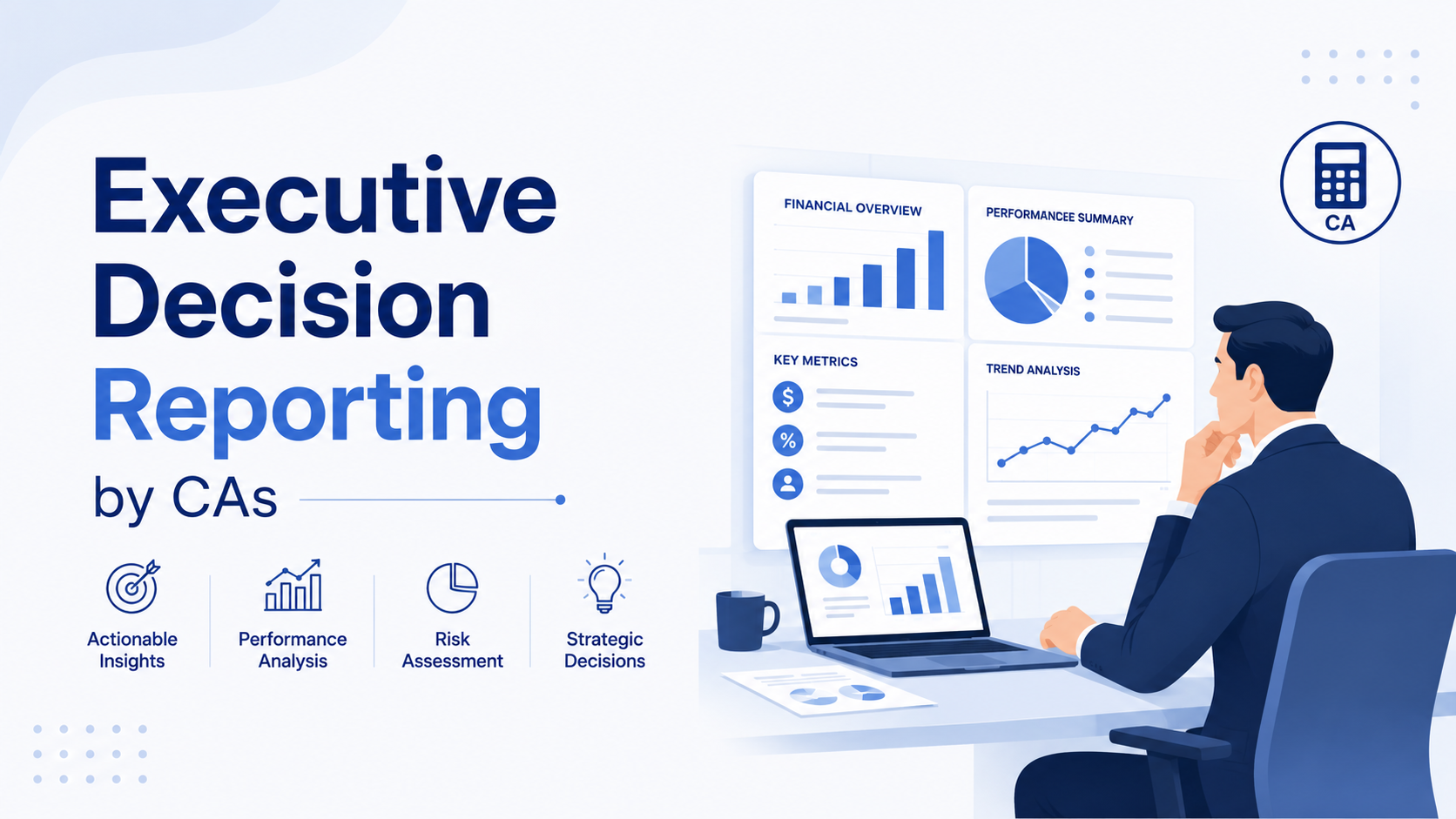
Table of Content
- Why Business Leaders Need Better Decision Support
- Understanding Executive Decision Reporting by CAs
- The Evolving Role of Chartered Accountants
- Turning Data into Actionable Insights
- Executive Decision Reporting Supports Strategic Planning
- Monitoring Performance More Effectively
- Risk Assessment Is a Critical Component
- Technology Is Transforming Executive Reporting
- Why Executive Decision Reporting Is a Growing Advisory Opportunity
- The Future of Executive Decision Reporting by CAs
- Conclusion
In today's business world, leaders need to swiftly and confidently make big calls—whether diving into new markets, tech investments, hires, or handling money stuff. Each choice can seriously affect the company's future. But getting it right isn't just about gut feelings or years of experience; it needs solid info, deep analysis, and a clear view of how the business is doing.
That's where exec decision reports from CAs come in. These days, CAs do more than crunch numbers and meet compliance ticks. They now help bosses grasp what's going on internally and offer smart insights for shaping strategies. With firms growing ever more data-focused, such CA advice is gaining major value and turning into key pro services.
Why Business Leaders Need Better Decision Support
Every organization churns out a ton of information – sales data, operational reports, financials, customer metrics, and performance stats regularly. But the real issue isn't having info; it's knowing what matters for business decisions.
Most execs don't have time to go through all the details daily. They need clear, actionable insights that show opportunities, risks, and trends. That's where CA-provided executive decision reporting comes in.
Rather than drowning management in loads of info, Chartered Accountants turn complex data into reports that aid in clear, informed choices. The key shifts from just listing numbers to explaining what they mean for the business.
Understanding Executive Decision Reporting by CAs
Executive decision reporting gives business leaders structured info for their big choices, both strategic and operational. Unlike old-fashioned financial reporting, which digs a lot into past numbers, this type zeroes in on insights, trends, and what they mean for the future.
For CAs, doing this kind of reporting means helping execs get a handle on where the company stands now and look ahead at what might be coming. It skips the deep dive into loads of financial stats and cuts right to the key bits that affect performance. Good reports usually nail down answers to major questions like these, so leaders can make smarter calls.
- Which business areas are performing well?
- What challenges require immediate attention?
- Are profitability levels improving or declining?
- What risks could affect future growth?
- How are strategic initiatives performing?
The Evolving Role of Chartered Accountants
Chartered Accountants' roles have shifted a lot. Yes, financial reporting and compliance are still crucial, but businesses now need CAs to help with strategy and decision-making too. This change shows in how CAs do more executive decision reporting. Rather than just making reports, they're expected to understand data, spot patterns, and explain what it means for the business. So, their impact goes way beyond numbers now.
CAs are uniquely positioned to perform this role because they understand financial performance, business operations, risk management, and governance. Their ability to connect different pieces of information allows them to provide a broader perspective on organizational performance. As businesses face increasing complexity, the advisory role of Chartered Accountants continues to expand.
Turning Data into Actionable Insights
Modern organizations struggle big time with turning data into actual useful info. Sure, tons of data are accessible, but that doesn't automatically boost decision-making. Leaders need context and some solid insights too – understanding why numbers shift and knowing the right moves.
That's where CAs step up. Their exec decision reporting lets leaders see what truly matters. By diving into business info, CAs spot key trends and help management zero in on priority issues.
For example, a decline in profitability may not immediately reveal its underlying causes. Through detailed analysis, a CA may identify rising operating costs, changing customer behavior, or declining efficiency in a specific business segment. These insights allow management to respond more effectively.
Executive Decision Reporting Supports Strategic Planning
Strategic planning tops the list of duties for top executives. Each big move comes with risks, so accurate info is key. No matter if a company eyes growth, diversifies, invests, or restructures, leaders need insight into what might happen. That's where executive reporting steps in – it offers that much-needed clarity. When CAs do this type of reporting, management gets the tools they need to assess options wisely.
- Revenue trends
- Profitability projections
- Resource allocation decisions
- Investment opportunities
- Business risks
These insights support evidence-based planning rather than decisions driven solely by assumptions. When leaders have access to reliable information, strategic discussions become more productive and focused.
Monitoring Performance More Effectively
Performance management isn't just about checking financial statements yearly. Today’s businesses need to keep an eye on how they’re doing all through the year. Executive reports let managers see their progress towards goals and spot issues early. Instead of waiting for those once-a-year results, leaders can check in more often and fix problems as needed. Plus, CAs usually include stuff like sales numbers and operating costs in their reports for making timely decisions.
- Revenue performance
- Margin analysis
- Cash flow trends
- Departmental performance
- Project profitability
- Operational efficiency indicators
Risk Assessment Is a Critical Component
Business decisions always come with some risk. Economic conditions, competition, and regulatory changes can impact how a company does. Tech upheavals and ops issues can too. One key part is what CAs do when they report on exec choices - spotting and judging these risks. They help managers see what threats could pop up and what those might cost financially.
Risk reporting may include:
- Liquidity concerns
- Regulatory developments
- Cost escalation trends
- Operational vulnerabilities
- Strategic risks
By highlighting these issues early, executive reporting allows organizations to respond proactively rather than reactively. This improves both decision quality and organizational resilience.
Technology Is Transforming Executive Reporting
Technology has dramatically improved the way businesses collect and analyze information. Dashboards, analytics platforms, cloud-based systems, and business intelligence tools now provide access to real-time performance data. However, technology alone cannot make decisions. The value of information depends on interpretation and context. This is why executive decision reporting by CAs remains essential even in highly automated environments.
Chartered Accountants help management understand which metrics matter, how performance should be interpreted, and what actions may be required. Technology provides information, but professional judgment transforms that information into business intelligence. As reporting systems become more sophisticated, the demand for analytical expertise is likely to increase.
Why Executive Decision Reporting Is a Growing Advisory Opportunity
Many organizations are moving beyond traditional compliance-focused relationships with their advisors. They are increasingly looking for professionals who can contribute to business growth and strategic planning. This trend is creating new opportunities for Chartered Accountants. Executive reporting allows CAs to become active participants in management discussions rather than remaining solely in reporting roles.
The growing demand for executive decision reporting by CAs reflects a broader shift within the profession. Businesses value advisors who can help them understand performance, identify opportunities, and navigate uncertainty. For CA firms, this represents an opportunity to develop long-term advisory relationships based on business insights rather than compliance requirements alone.
The Future of Executive Decision Reporting by CAs
As businesses continue generating larger volumes of data, the ability to interpret information effectively will become increasingly important. Executives will need reporting systems that provide clarity, focus, and actionable insights rather than overwhelming amounts of information.
This trend is expected to increase the importance of executive decision reporting by CAs. Chartered Accountants who develop expertise in analytics, performance measurement, business intelligence, and strategic reporting will be well-positioned to support future business leaders. The profession is gradually moving from explaining what happened in the past to helping organizations prepare for what comes next.
Conclusion
CAs are now crucial for modern business management through executive decision reporting. They turn complex data into useful insights, letting leaders make smart choices, boost performance, and manage risks better. This helps with long-term growth too. With orgs relying more on data, this reporting is shifting from mere financial stuff to a key advisory role. So, CAs get a big chance to shape business strategy and drive overall success.

FAQs
What is executive decision reporting by CAs?
Executive decision reporting by CAs involves preparing analytical reports that help business leaders make informed strategic, financial, and operational decisions.
Why is executive decision reporting important?
It provides management with relevant insights, performance analysis, and risk information that support effective decision-making.
How do Chartered Accountants contribute to executive reporting?
They analyze financial and operational data, identify trends, assess risks, and present information in a format that supports leadership decisions.
How is executive reporting different from financial reporting?
Financial reporting focuses on historical results, while executive reporting emphasizes insights, performance drivers, future implications, and strategic decision support.
What information is included in executive decision reports?
Reports may include profitability analysis, revenue trends, cash flow data, risk assessments, performance indicators, and strategic insights.
How does executive reporting support strategic planning?
It provides data-driven insights that help organizations evaluate opportunities, allocate resources effectively, and make informed long-term decisions.
Can executive decision reporting improve business performance?
Yes. Better information helps management identify problems early, monitor progress, and implement corrective actions more effectively.
What role does risk analysis play in executive reporting?
Risk analysis helps management understand potential threats and evaluate their impact on business objectives and financial performance.
How is technology influencing executive reporting?
Technology improves data collection, analytics, dashboard reporting, and real-time visibility into business performance.
What is the future scope of executive decision reporting by CAs?
The scope is expected to grow as businesses increasingly seek data-driven insights, strategic guidance, and performance-focused advisory services from Chartered Accountants.